Do Museums Pay Private Collectors to Showcase Their Art?
The 24 best museums in Paris
And then you've done the Louvre – but this urban center has plenty more than to offer. These are the all-time museums in Paris according to us

Paris is home to the world'southward most recognisable smile (well, smirk), simply there's much more to the City of Light's museum offering than Mona Lisa'south grin.
Yous have to explore the Louvre'south sprawling collection at to the lowest degree one time, only that shouldn't hateful missing out on the city's excellent collection of museums, attractions and things to do too. Whether it's contemporary fine art, fashion, architecture or temples to Monet and Picasso, there's a museum for visual art in all its forms here. So grab your camera – and a sketchpad should you feel inspired – and head down to i of the very best museums in Paris according to u.s.a..
RECOMMENDED: Total guide to the all-time things to exercise in Paris
This commodity includes chapter links. These links accept no influence on our editorial content. For more than information, click here .
All-time museums in Paris

i. The Centre Pompidou
It takes a lot to rival the iconic historic landmarks of the Eiffel Tower and Arc de Triomphe, but Eye Pompidou'due south primary colours, exposed pipes and air ducts make it ane of the all-time-known sights in the French uppercase. Known to locals as simply 'Beaubourg' because of its location, Pompidou's modern art drove is the largest in Europe, rivalled only in breadth and quality by MoMA in New York. When it first opened in 1977, the idea of combining a modern fine art museum, library, exhibition and performance space and picture palace in one multi-purpose complex was revolutionary, but it paved the fashion for most art institutions around the earth.
2. Musée des Arts et Métiers
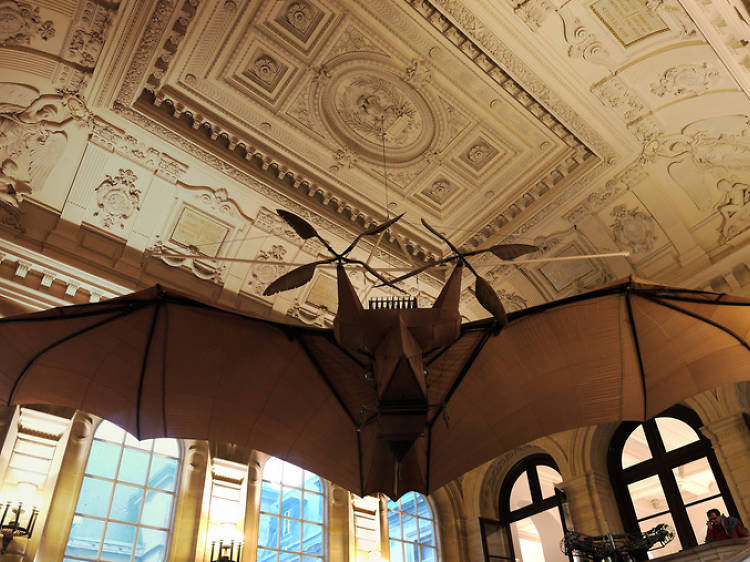
Don't become confused by the name. This 'arts and crafts' museum is, in fact, Europe's oldest science museum. Founded in 1794 by constitutional bishop Henri Grégoire, it was initially a means to educate France's manufacturing manufacture in useful scientific techniques. It became a museum proper in 1819, and has been wowing visitors with its vast, fascinating and attractively laid out collection of treasures for more than two centuries. Highlights include Pascal's computing devices, an enormous 1938 Television receiver, scale models of buildings and machines that must have required at least equally much engineering skill every bit the originals, and the world's showtime powered vehicle – Cugnot'southward 1770 'Fardier'.
3. Musée du Quai Branly
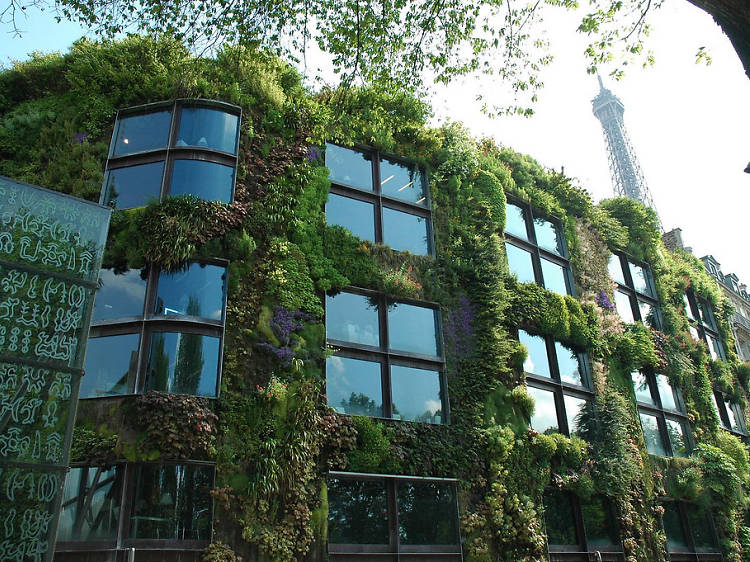
The living walls of the Musée du Quai Branly are worth the short walk along the Seine from the Eiffel Tower solitary, but it'southward what is inside that will keep yous at that place for hours. A vast showcase for not-European fine art and culture,it brings together the collections of the Musée des Arts d'Afrique et d'Océanie and the Laboratoire d'Ethnologie du Musée de l'Hommethere in rooms dedicated to fine art from Africa, Oceania, Asia and the Americas. Treasures include a 10th-century anthropomorphic Dogon statue from Mali, Vietnamese costumes, Gabonese masks, Aztec statues, Peruvian feather tunics and rare frescoes from Federal democratic republic of ethiopia.
four. Jeu de Paume
The Centre National de la Photographie'southward Tuileries gardens location makes it the ideal 2d stop after a trip to the Louvre or Orsay. Although the 2 white, well-nigh hangar-like galleries don't make it an intimate space, information technology works well for showcase retrospectives. Downstairs in the basement, you'll find a video art and cinema suite that shows new digital installation work, likewise as characteristic-length films made past artists. Its café and bookshop are well worth a visit in their ain correct, too.
v. Musée Bourdelle
Sculptor Antoine Bourdelle was a big deal in the late 1800s and early 20th century. A educatee of Rodin, the Frenchman produced a number of monumental works including the Isadora Duncan and Nijinsky–inspired modernist relief friezes at the Théâtre des Champs-Elysées. This museum is dedicated to the artist's life and his apartment and studios take centre stage. Two farther wings have been added since Bourdelle'due south death in 1929, and each explores his piece of work in even greater detail – including his various statuary studies of Beethoven in dissimilar guises.
6. The Louvre
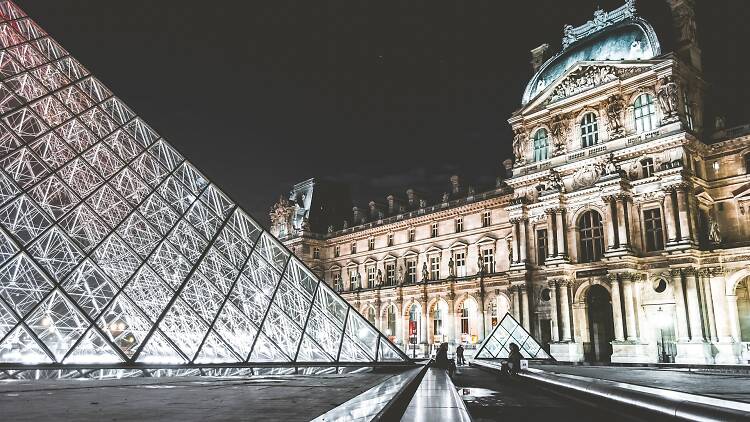
The globe'southward largest and most visited museum needs no introduction, but here's ane anyway. Established in 1793, the Louve has grown into a city within a city – a vast, multi-level maze of galleries, passageways, staircases and escalators, all topped with its iconic pyramid roof. While a lot of its x million annual visitors brand a bee-line for a certain famous lady – hullo Mona Lisa – there are more than 35,000 works of art and artefacts to see one time you've got the side-heart from da Vinci's virtually famous creation. Be certain to check the website or lists in the Carrousel du Louvre to see which galleries are closed on certain days to avoid missing out on what you lot want to see.
7. Musée d'Orsay
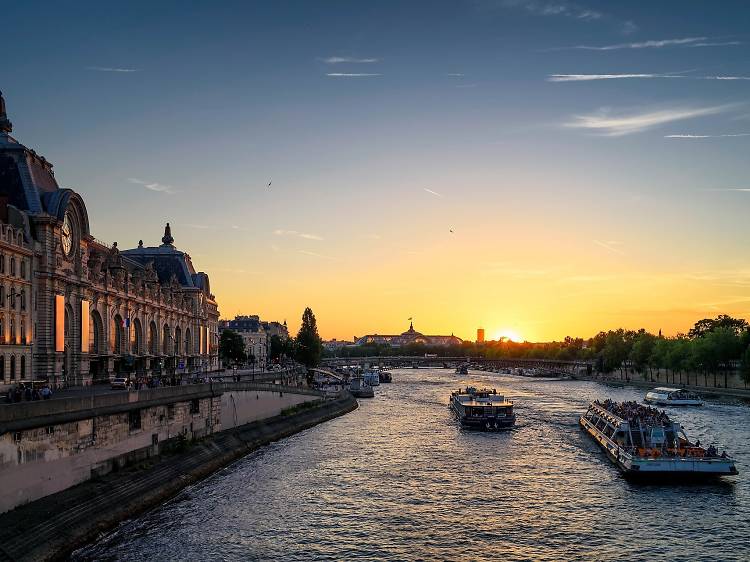
If y'all similar art that leaves an impression, then the Musée D'Orsay is a must. Housed in a former train station, the collection includes all of the Impressionist and Post-impressionist movements' big hitters – Monet, Renoir, van Gogh and Toulouse-Lautrec – likewise as some dapper decorative arts from the Art Nouveau era and a wide range of 19th-century sculpture. Be certain to visit the café and picket time go past (literally) on the museum's giant transparent clockface.
8. Musée de l'Orangerie
The Orangerie is dwelling to eight, tapestry-sized 'Nymphéas' (water lilies) paintings. Housed in two plain oval rooms, the sparse setting allows visitors to immerse themselves fully in the amazing, ethereal romanticism of Monet's works. There's more to the Orangerie than Monet though. Downstairs, you lot'll find works by Cézanne, Renoir, Matisse and Picasso, while the Jean Walter and Paul Guillaume drove of Impressionism is worth a detour.
ix. Musée Marmottan-Monet
While the Musée de l'Orangerie is home to his tapestries, it's this former hunting pavilion on the edges of Bois de Boulogne that lays claim to the largest Monet collection in the world. Originally a museum of the Empire period left to the land by collector Paul Marmottan, a donation by Monet's son Michel in 1966 meant it added 165 of the Impressionist artist's works, plus sketchbooks, palettes and photos overnight. Other gems in its collection include works by Renoir, Manet, Gauguin, Caillebotte and Berthe Morisot, 15th-century primitives and a Sèvres clock.
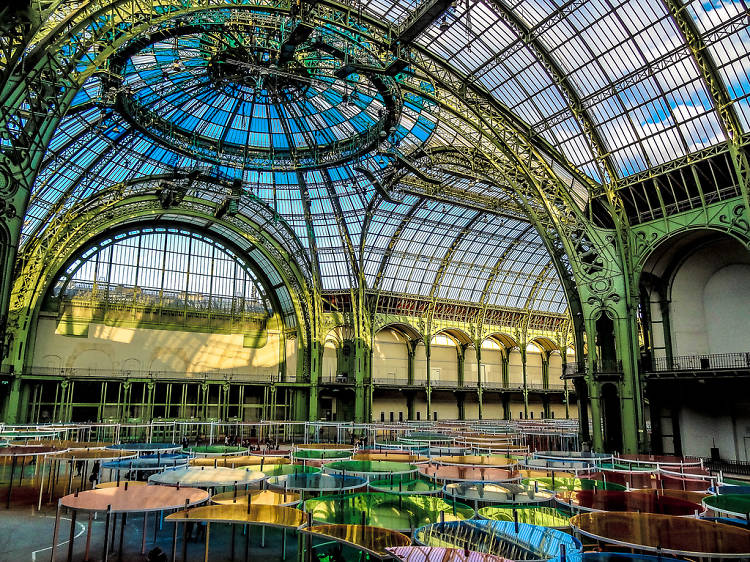
x. Galeries Nationales du K Palais
The huge, sprawling galleries of the Yard Palais were originally constructed for the Exposition Universelle of 1900 – so information technology's no surprise this place is the definition of thou. The exterior is in the Beaux-Arts style and dominated by an middle-catching steel-framed glass roof. In contempo years information technology has put on huge exhibitions on the likes of Irving Penn, Marc Chagall and Paul Gauguin.
eleven. Musée Nissim de Camondo
Put together past Count Moïse de Camondo, this collection is named after his son Nissim, who was killed during the Offset World War. Moïse replaced the family's two houses near Parc Monceau with this palatial residence and lived here in a style in keeping with his love of the 18th century. Thou get-go-floor reception rooms are filled with furniture past craftsmen of the Louis Xv and XVI eras, silver services, Sèvres and Meissen porcelain, Savonnerie carpets and Aubusson tapestries.
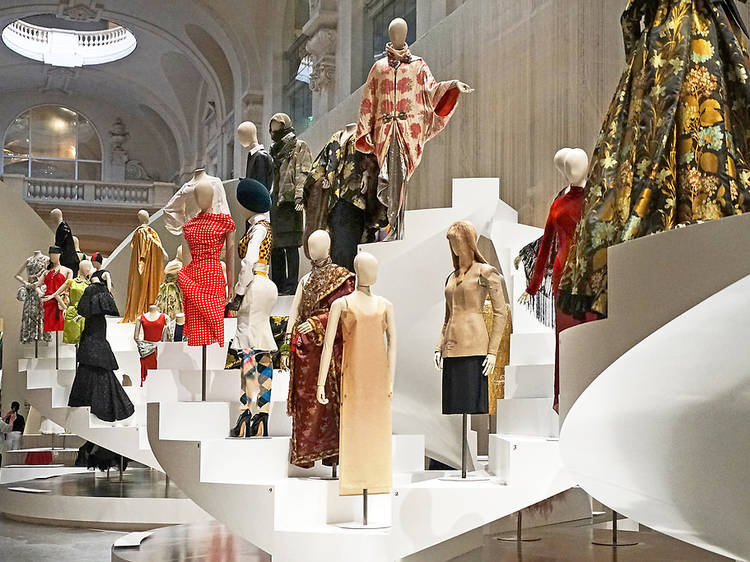
12. Musée des Arts Décoratifs
Taken every bit a whole (alongside the Musée de la Mode et du Textile), this is one of the world's major collections of design and the decorative arts. Located in the west fly of the Louvre for near a century, the venue reopened in 2006 later on a decade-long, €35 million restoration of the building and of 6,000 of the 150,000 items donated mainly by private collectors. The focus here is French piece of furniture and tableware, but from improvident carpets to delicate crystal and porcelain, there'south almost likewise much to admire. Of near entreatment to the layman? The reconstructed menses rooms, 10 in all, showing how the other (French) half lived from the late 15th century to the early on 20th.
xiii. Musée National Gustave Moreau
This wonderful museum combines the small private apartment of Symbolist painter Gustave Moreau with the vast gallery he built to display his work – laid out as a museum past the painter himself, and opened in 1903. Downstairs shows his obsessive collecting tendencies through family portraits, Thou Tour souvenirs and a boudoir devoted to the object of his unrequited beloved, Alexandrine Dureux. Upstairs is Moreau's fantasy realm, which plunders Greek mythology and biblical scenes for canvases filled with writhing maidens, trance-similar visages, mystical beasts and strange plants. Don't miss the trippy masterpiece 'Jupiter et Sémélé' on the second floor. Printed on boards you tin can carry around the museum are the artist's lengthy, rhetorical and bluntly pretty wild commentaries.
14. Musée de la Chasse et de la Nature
Many of the exhibits here seem more suited to an art gallery than a museum. The history of hunting and humankind's broader relationships with the natural globe are examined in things similar a quirky series of wooden cabinets devoted to the owl, wolf, boar and stag, each equipped with a bleached skull, small drawers you lot can open to reveal droppings and footprint casts, and a binocular eyepiece y'all can peer into for footage of the brute in the wild. A cleverly elementary mirrored box contains a stuffed hen that is replicated to infinity on every side; and a blimp trick is set curled up on a Louis 16 chair as though it were a domestic pet. Thought-provoking stuff.
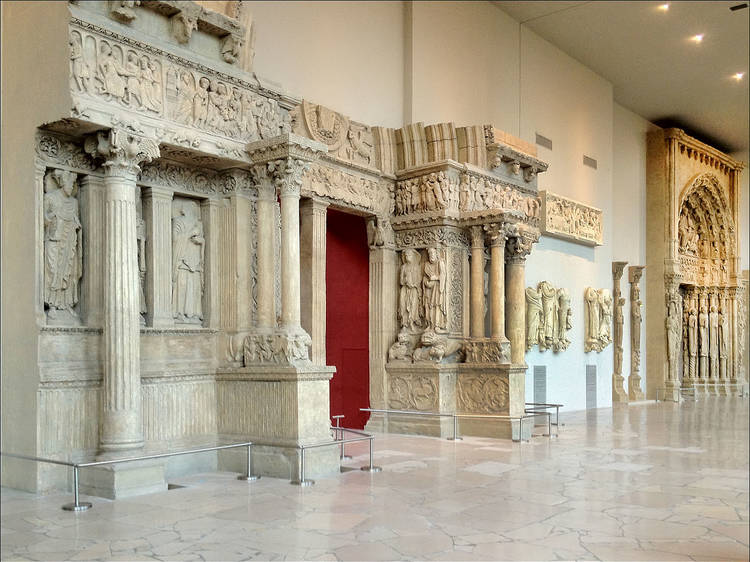
fifteen. Cité de l'Architecture et du Patrimoine
Opened in 2007, this architecture and heritage museum impresses principally because of its scale (massive). The expansive ground floor is filled with life-size mock-ups of cathedral façades and heritage buildings, with interactive screens that place the models in context. Upstairs, darkened rooms firm full-scale copies of medieval and Renaissance murals and stained-glass windows. The highlight of the modern architecture section? A walk-in replica of an apartment from Le Corbusier's Cité Radieuse in Marseille.
sixteen. Musée de la Vie Romantique
The 9th arrondissement was teeming with composers, writers and artists when Dutch creative person Ary Scheffer built this small villa in 1830. The likes of Chopin and Liszt were guests at Scheffer'southward soirées, while novelist George Sand would likewise make an apperance. The museum is devoted to Sand, plus Scheffer'south paintings and other mementoes of the Romantic era. Renovated in 2013, the museum's tree-lined courtyard café and greenhouse make for the ideal summer retreat.
17. Petit Palais
On the other side of the road from the Grand Palais, you'll detect the Petit Palais. Although this institution was also built for the 1900 Exposition Universelle, information technology's fondly known as the Grand Palais's younger sibling. Backside its Belle Époque exterior visitors can cast their eyes on some of the city's most wonderful fine art and sculptures, including piece of work by Poussin, Doré, Courbet and the Impressionists. Art Nouveau fans are in for a treat downstairs, where you'll notice jewellery and knick-knacks by Belle Époque biggies Lalique and Galle.
18. Musée National Rodin
The Rodin museum occupies the hôtel particulier where the sculptor lived in the final years of his life. 'The Kiss', 'The Cathedral', 'The Walking Man', portrait busts and early terracottas are exhibited indoors, every bit are many of the individual figures or small-scale groups that also announced on 'The Gates of Hell'. Rodin'due south works are accompanied by several pieces by his mistress and pupil, Camille Claudel. The walls are hung with paintings past van Gogh, Monet, Renoir, Carrière and Rodin himself. Most visitors have greatest affection for the gardens: await out for 'The Burghers of Calais', 'The Gates of Hell' and 'The Thinker'.
nineteen. Palais de Tokyo
When it opened in 2002, many thought the Palais's stripped-dorsum interior was a design statement. In fact, it was a response to tight finances. The 1937 edifice has now come into its own as an open up-program space with a skylit central hall, hosting exhibitions and performances. Extended hours and a funky café take drawn a younger audition, and the roll-call of gimmicky artists is impressive (Pierre Joseph, Wang Du and others). The name dates to the 1937 Exposition Internationale, just is also a reminder of links with a new generation of artists from the Far East.
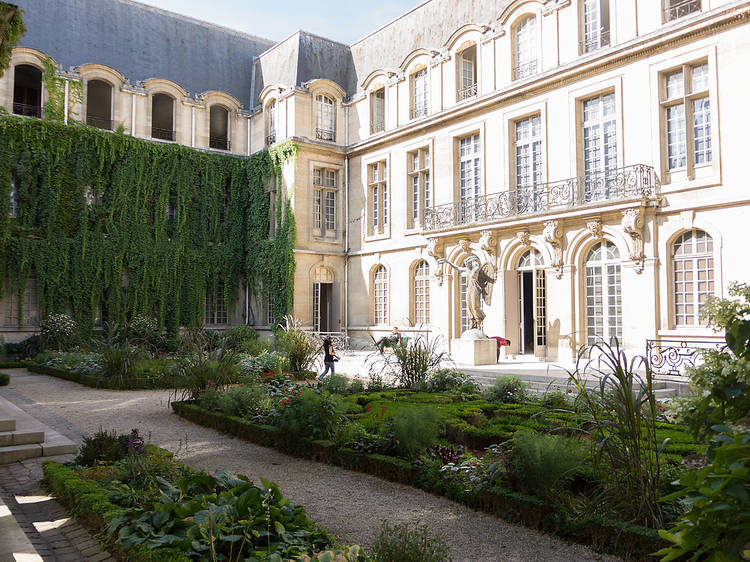
20. Musée Carnavalet
Here, 140 chronological rooms draw the history of Paris, from pre-Roman Gaul to the 20th century. Built in 1548 and transformed by Mansart in 1660, this fine firm became a museum in 1866, when Haussmann persuaded the city to preserve its beautiful interiors. Original 16th-century rooms firm Renaissance collections, with portraits by Clouet and article of furniture and pictures relating to the Wars of Religion. The get-go floor covers the period up to 1789, with furniture and paintings displayed in restored, period interiors; neighbouring Hôtel Le Peletier de St-Fargeau covers the period from 1789 onwards. Displays relating to 1789 detail that yr'south convoluted politics and bloodshed, with prints and memorabilia, including a chunk of the Bastille.
21. Musée de Cluny
The national museum of medieval fine art is best known for the beautiful, allegorical Lady and the Unicorn tapestry cycle, merely also has important collections of medieval sculpture and enamel. At that place'southward also a respectable program of medieval-themed concerts in which troubadours pay homage to the museum's collection. The edifice itself, normally known every bit Cluny, is a rare example of 15th-century secular Gothic architecture, with its foliate Gothic doorways, hexagonal staircase jutting from the façade and vaulted chapel. It was congenital from 1485 to 1498 – on top of a Gallo-Roman bathing circuitous. The baths, built in characteristic Roman bands of stone and brick masonry, are the finest ancient remains in Paris.
22. Musée Jacquemart-André
Long terrace steps and a pair of stone lions usher visitors into this grand 19th-century mansion, home to an impressive collection of objets d'art and fine paintings. Information technology was assembled by Edouard André and creative person married woman Nélie Jacquemart, using coin inherited from his rich banking family unit. The mansion was congenital to order to firm their hoard, which includes Rembrandts, Tiepolo frescoes and paintings by Italian masters Uccello, Mantegna and Carpaccio. The side by side tearoom, with its fabled tottering cakes, is a favourite with the smart tiffin set.
23. Musée Picasso
Offset opened in 1985, the Musée Picasso is one of the metropolis's most precious and prestigious institutions. Set in the great 17th century Hôtel Salé in the heart of the historic Marais area, the earth's largest drove of Picasso's masterpieces hang on the walls of bright, spacious exhibition rooms.
24. Fondation Cartier pour 50'Art Contemporain
Jean Nouvel's glass and steel building, an exhibition centre with Cartier'south offices to a higher place, is as much a work of art every bit the installations inside. Shows by artists and photographers ofttimes take broad-ranging themes, such every bit 'Birds' or 'Desert'. Live events around the shows are called Nuits Nomades.
What ISN'T there to do in this marvellous metropolis?
An email you'll actually love
🙌 Awesome, y'all're subscribed!
Thanks for subscribing! Look out for your first newsletter in your inbox soon!
Source: https://www.timeout.com/paris/en/museums/unmissable-museums-in-paris
0 Response to "Do Museums Pay Private Collectors to Showcase Their Art?"
Post a Comment